Revora
Role / Services
UI design & frontend development
Context
Dashboard prototype
Location & year
Hungary ©
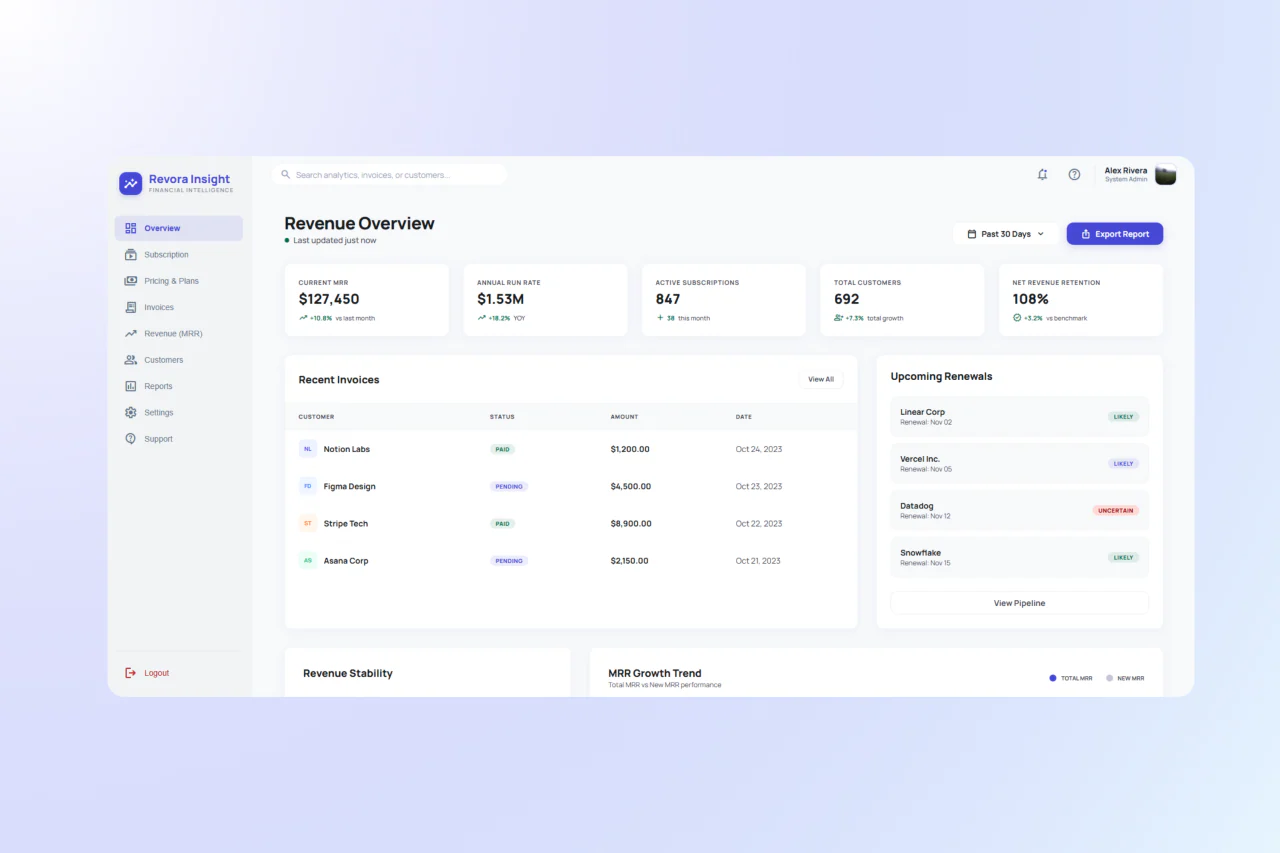
Overview
How far can plain HTML and CSS go?
Revora is a static financial dashboard prototype with revenue, invoice, subscription and settings views. It explores what a clean, framework-free implementation can achieve in usability, structure and visual clarity for an interface that is mostly presentational.
It also served as a testbed for evaluating AI-generated UI, comparing structure quality, layout consistency and visual coherence across generation approaches.
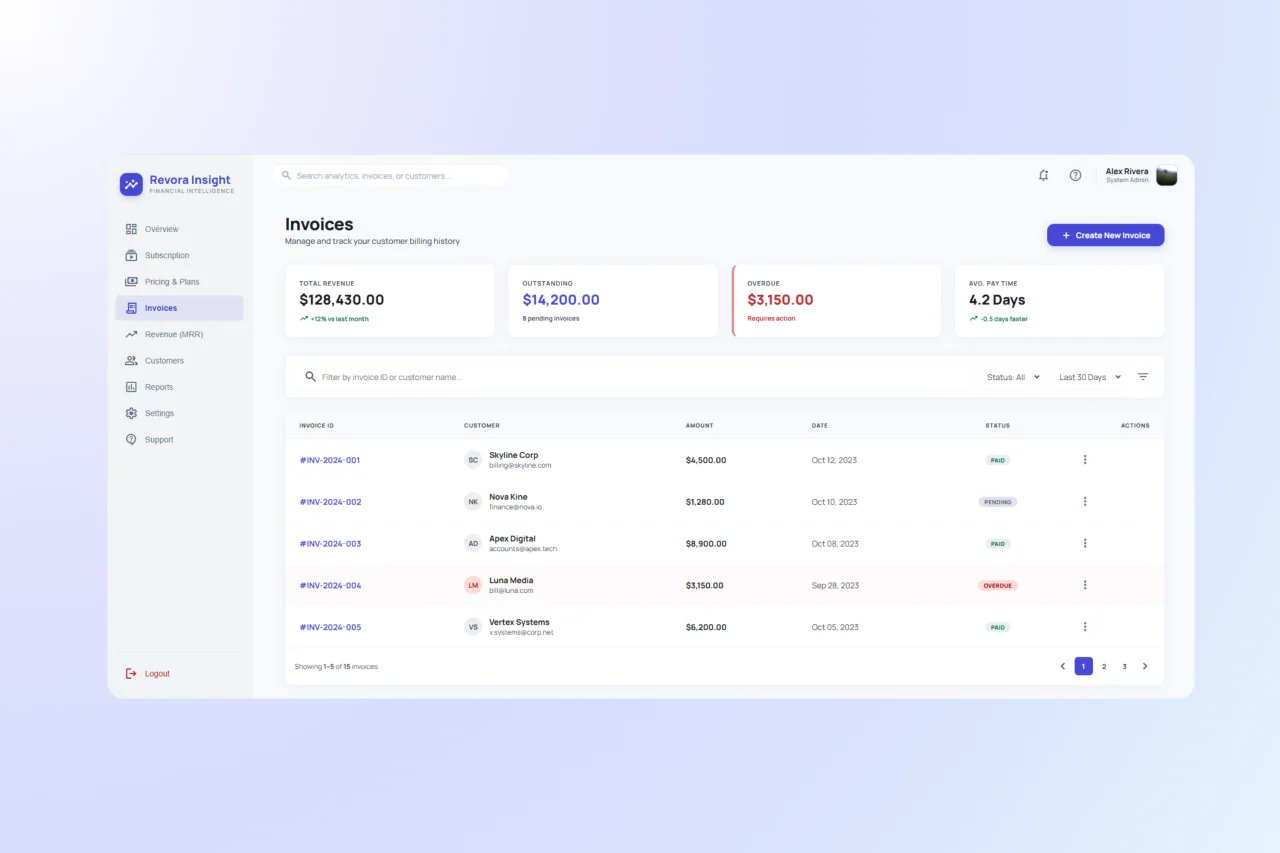
Approach
A design system without a component framework.
Every element is hand-built with semantic HTML and structured CSS. Cards, tables, forms and filter sections follow consistent, reusable patterns, which gives the interface modularity without a formal component system.
The work was design-first: layout clarity, spacing and visual hierarchy came before dynamic behaviour.
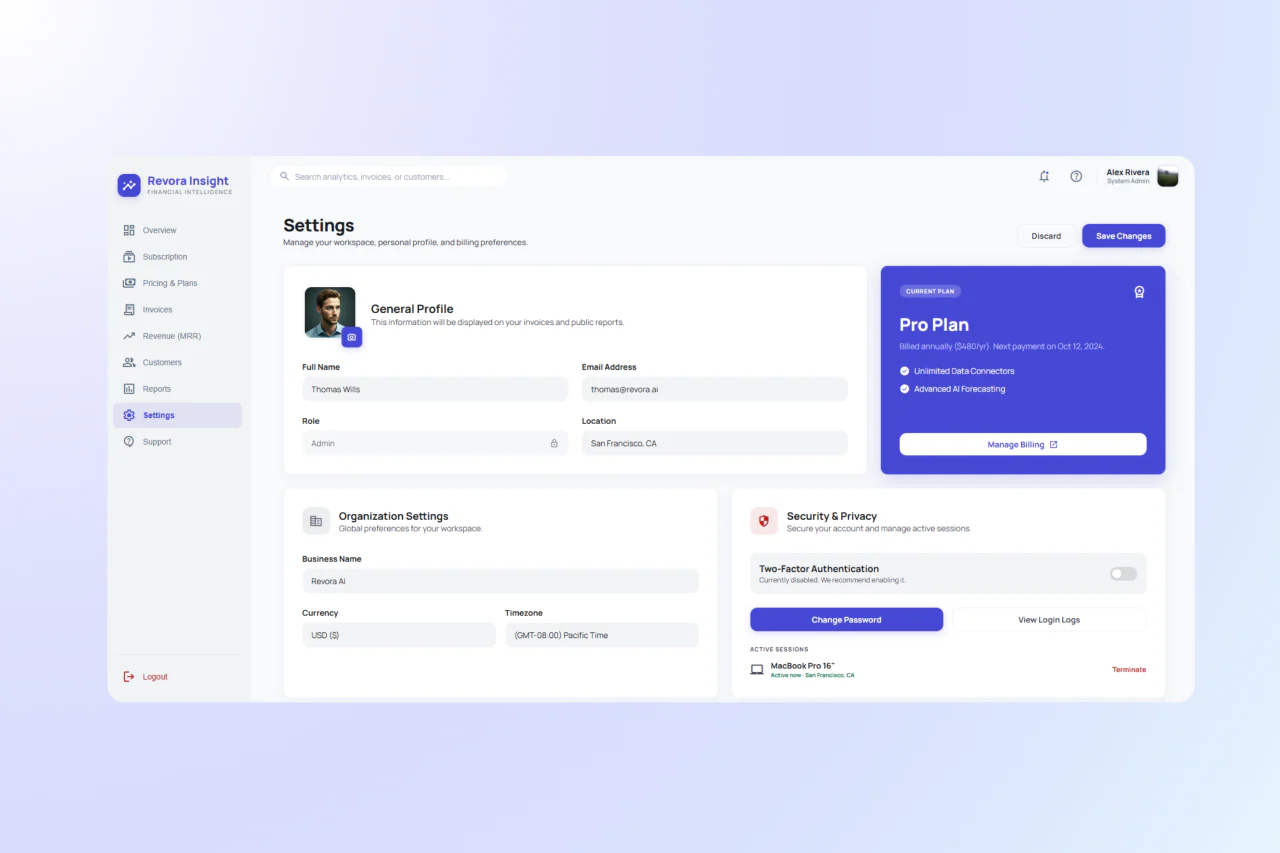
Challenges
Consistency without components
Repeated UI patterns stay consistent through strict class naming conventions and reused layout patterns.
A growing static structure
As sections multiplied, a modular, section-based organization kept the structure manageable.
Layout without tooling
Spacing, alignment and responsiveness come from deliberate CSS decisions rather than utility frameworks or grid systems.
Technologies
- HTML5
- CSS3